
Dec
Competitive Gaming
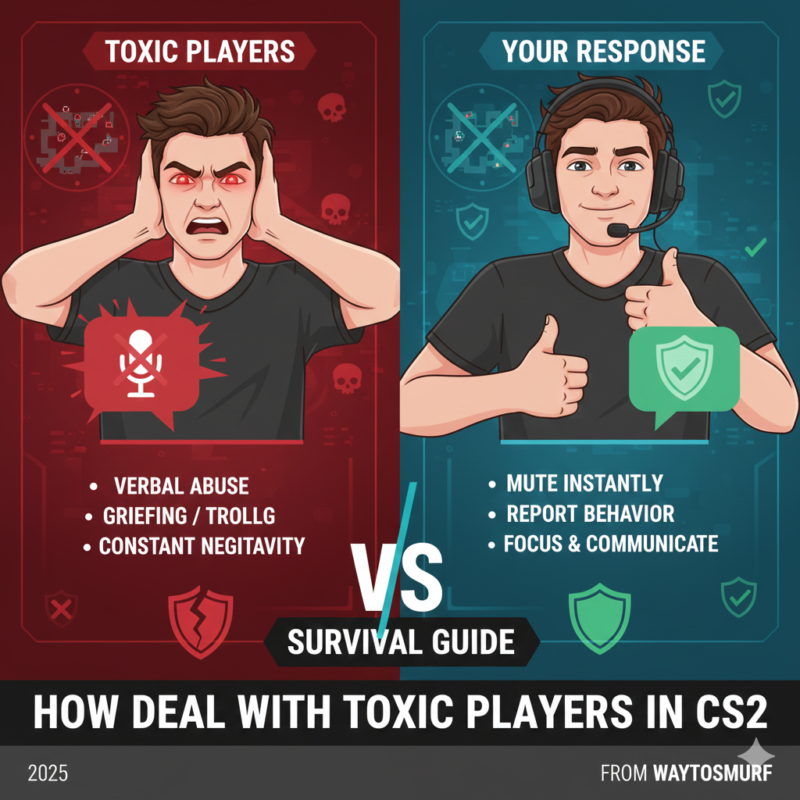
How to Deal with Toxic Players in CS2 (2025 Guide)
Counter-Strike 2 (CS2) is one of the most competitive FPS titles today — and while that makes every match intense and thrilling, it also exposes players to varying personalities. Some teammates or opponents can be encouraging and communicative — while others can be toxic, unhelpful, or downright hostile.
Toxicity doesn’t just ruin a single round — it impacts your focus, confidence, and overall experience. Handling toxic players effectively is a key skill for every CS2 player who wants to climb ranks and enjoy the game.
Whether you’re a beginner just learning the ropes, or a seasoned player pushing for higher ranks, this guide will show you how to deal with toxic players in CS2, build resilience, and maintain a positive competitive mindset.
And if you’re also looking for a way to jump into ranked play quickly with a trusted profile, check out this trusted marketplace:
👉 Buy cs2 accounts — https://waytosmurf.com/product-category/counter-strike-2-premier-accounts/
What Is Toxicity in CS2?
“Toxicity” refers to negative, harmful, or disruptive behavior from players — either teammates or opponents. That can include:
📌 Harassing language or shouting
📌 Blaming without reason
📌 Griefing or refusing to play
📌 Intentional sabotage
📌 Excessive negativity
📌 Threats, insults, or hostility
Toxicity doesn’t always look like obvious abuse — it can also be passive behavior like silent treatment, refusal to communicate, or uncooperative play.
Why Toxic Players Appear in CS2
1. Competitiveness & Pressure
CS2 is a high-stakes competitive game. The pressure to win often brings out emotional reactions.
2. Anonymity Online
Players feel less accountable because they are anonymous.
3. Ego & Overconfidence
Some players believe they’re better than others, leading to rude comments.
4. Skill Gap Frustration
If someone feels outclassed or blamed for a loss, they might lash out.
5. Cultural or Language Barriers
Miscommunication or cultural differences can also trigger misunderstandings.
Knowing why toxic players behave that way doesn’t excuse it — but it helps you understand it and react more strategically.
Why You Shouldn’t Let Toxic Players Dictate Your Game
💥 Toxic players affect your:
✔ Focus
✔ Decision-making
✔ Team coordination
✔ Mental comfort
✔ Overall performance
Reacting emotionally can deteriorate your gameplay faster than the toxicity itself.
Step-by-Step: How to Respond to Toxic Players in CS2
Let’s go through actionable steps to deal with toxicity without losing your cool or game effectiveness.
1. Stay Calm and Don’t Engage
Reacting emotionally gives toxic players power. When someone begins to flame:
💬 DON’T respond emotionally
💬 DON’T insult back
💬 DON’T take it personally
Silence or mature responses always beat reactive toxicity.
2. Use Mute and Report Tools
CS2 includes built-in tools to handle disruptive players:
➡ Mute voice chat — prevents hearing toxic communication
➡ Mute text chat — blocks keyboard insults
➡ Report after match — for abusive behavior or persistent toxicity
Documentation and reporting help developers improve matchmaking and community behavior.
3. Don’t Feed the Flame
Some toxic players push for responses.
But no response = no reward for them.
- Don’t reply to every insult
- Don’t argue about rank or skill
- Don’t try to “correct” them
Let your gameplay, not your temper, speak for you.
4. Encourage Positive Teammates
Instead of engaging with toxicity, shift focus to those who are playing positively.
✔ Praise good calls
✔ Acknowledge utility usage
✔ Compliment clutch plays
Positive reinforcement boosts team morale and reduces the impact of negative voices.
5. Learn to Recognize Constructive vs Toxic Criticism
Not all feedback is toxic. Distinguish between:
🔹 Constructive criticism — actionable and focused on gameplay
🔸 Toxic insults — personal and unhelpful
Example:
✔ “Let’s try a slower push B” — Constructive
❌ “You’re trash, stop playing” — Toxic
Respond only to constructive suggestions.
6. Focus on What You Can Control
You can’t control how others behave, but you can control your reaction, including:
✔ Your attitude
✔ Your communication choices
✔ Your team calls
✔ Your performance mindset
Shift your mindset from emotional reaction to strategic focus.
7. Take Breaks When Necessary
If toxicity starts affecting your mood:
📌 Pause the game
📌 Take a short walk
📌 Drink water
📌 Reset your focus
Playing while tilted or frustrated only worsens your performance.
8. Build a Positive Squad or Play With Friends
Playing with known teammates reduces randomness and toxicity.
✔ Friends who communicate well
✔ Better coordination
✔ Less random toxicity
If you want smoother ranked matches, pairing with teammates you trust consistently improves your experience.
9. Report Repeat Offenders
After every match:
✔ Report abusive language
✔ Report intentional griefing
✔ Report frequent rude players
These reports go into Valve’s player behavior analytics — only with these reports can toxic players be identified and handled.
10. Avoid Sticky Situations — When Muting Isn’t Enough
If a player continues toxicity, position yourself away from them:
💬 Reduce calls with that player
📉 Focus on team strategy, not individual flame wars
⚔ Prioritize in-game tasks over chat arguments
Gameplay matters more than ego battles.
How Toxicity Affects Your Rank Progression
Toxic environments often:
🚫 Distract focus
🚫 Reduce teamwork
🚫 Waste utility
🚫 Cause rushed or poor decisions
Ranked progression is built on consistent performance, teamwork, discipline, and strategy — toxicity undermines all of that.
Psychological Tips to Stay Mentally Strong
Competitive games trigger emotional responses, but here’s how you stay strong:
Mindset Tip 1 — View Losses as Learning
Every loss reveals what adjustments you can make, not how bad someone played.
Mindset Tip 2 — Focus on Your Inputs
You can’t change others, but you can control your own play.
Mindset Tip 3 — Use Silence Strategically
Sometimes not responding is the most powerful action.
When Toxic Players Go Beyond Talk — Griefers & Sabotage
Toxicity isn’t just language — it can also include:
🔸 Team killing intentionally
🔸 Rushing bomb without call
🔸 Throwing rounds
🔸 Blocking teammates or anti-teamplay
In such cases:
✔ Mute and report
✔ Avoid engaging
✔ Communicate clearly with other players
✔ Focus on winning rounds strategically
Toxic sabotage often loses focus — not rounds.
Tools & Settings in CS2 to Reduce Toxic Exposure
1. Voice Chat Mute
Turn off voice from one or all players when needed.
2. Text Chat Mute
Block chat spam from toxic chatter.
3. Turn Off All Chat
Some players prefer to disable global and team chat entirely.
4. Friendly Ping Only
Use pings for strategy, and avoid voice/text chaos.
Using Reports to Help the Community
After every game:
✔ Report abusive language
✔ Report griefing
✔ Report harassment
✔ Report false calls
Multiple reports lead developers and moderation systems to warn or restrict bad actors.
When to Take a Break or Stop Playing for the Day
If multiple games create ongoing stress:
📌 Take a break
📌 Switch to a casual mode or non-FPS game
📌 Come back later with a calm focus
Burnout and tilt are real — managing mental health helps your long-term performance.
Turning Toxic Encounters Into Growth Opportunities
Instead of just blocking toxicity, use it as an opportunity to:
✔ Improve focus under pressure
✔ Learn patience
✔ Stay calm amongst chaos
✔ Reinforce good habits
✔ Develop emotional control
Professional players often face worse toxicity than casual players but maintain performance through discipline.
How Your Account’s Quality Affects Your Matchmaking Experience
Matchmaking is tied to:
✔ Trust factor
✔ Account behavior
✔ Gameplay history
✔ Reports from other players
New or low-trust accounts often face more chaotic matches — including higher risk of toxicity and uncooperative teammates.
If you’re serious about competitive play and want smoother matches with fewer disruptive players, consider a trustworthy competitive profile.
👉 Explore Buy cs2 accounts from a reputable marketplace here:
https://waytosmurf.com/product-category/counter-strike-2-premier-accounts/
Good accounts often come with higher trust factor and better matchmaking pools — improving your overall experience.
Frequently Asked Questions (FAQ)
1. Can muting toxic players improve my gameplay?
Yes — muting limits distractions and helps you focus on strategy and execution rather than negative chatter.
2. Should I ever respond to a toxic player?
Generally no. Most negative players seek a reaction. Staying silent and focused is more effective.
3. Does reporting really help?
Yes — reporting contributes to behavior tracking and moderation systems, which help reduce repeat offenders over time.
4. How can I stay positive in ranked matches?
Focus on communication, use pings strategically, play with friends, and mute sources of negativity.
5. Can buying a high-trust account help reduce toxicity encounters?
High-trust accounts often match with more serious gamers, which may reduce exposure to highly toxic players.
Conclusion — Stay Focused, Stay Calm, Play Smart
Dealing with toxic players in CS2 is a reality of competitive gaming, but it doesn’t have to ruin your experience. With the right mindset, tools, communication strategies, and supportive habits, you can rise above distraction and keep your focus sharp.
Mute, report, stay calm — and focus on your improvement.
And if you’re looking to improve your matchmaking experience from the start, consider a trustworthy CS2 profile from a reputable source:
👉 Buy cs2 accounts — https://waytosmurf.com/product-category/counter-strike-2-premier-accounts/
Play with confidence. Rise above toxicity. And enjoy the game.
